Who actually carries this decision on site?
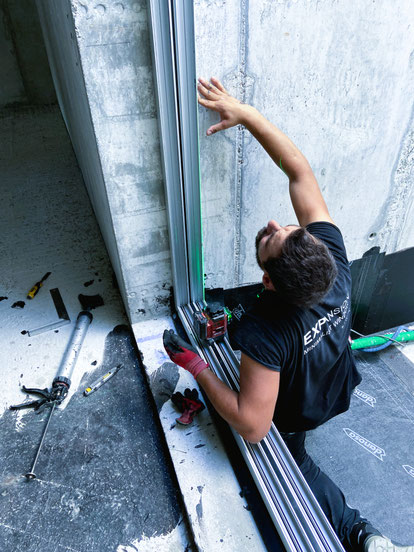
Why the installer defines long-term trust.
No system performs better than its installation.
In minimalist architecture, the installer is not merely executing drawings. He orchestrates sequencing, interfaces and risk allocation across trades.
In practice, architects often trust people more than systems.
Not because systems are irrelevant, but because even the most refined solution depends on how it is implemented on site.
Minimalist window systems make this dependency visible.
They are integrated early, influence multiple trades and leave little room for correction. As a result, the execution partner becomes a central figure in the project — not only technically, but organisationally.
The installer shapes timing, sequencing and coordination.
He connects structural work, waterproofing, screed levels and final finishes. Decisions taken here affect not only installation, but long-term performance and legal responsibility.
Maintenance and long-term operability also depend on his technical understanding of rolling systems and motorisation.
Large formats add another layer of reality.
Handling extreme weights safely requires experience, infrastructure and discipline. Lifting equipment, logistics and safety procedures are not optional details, but prerequisites for responsible execution.
Beyond this, technical competence continues to expand.
Glazing specification, lifting logistics for extreme weights, motorisation, control systems and integration into building automation increasingly fall within the installer’s scope. Long-term reliability depends on understanding these systems — and on the willingness to monitor and maintain them over time.
For architects, this means that trust is not built through product promises.
It is built through partners who understand their role, respect the architectural intent and carry responsibility consistently.
Choosing the right installer is therefore not a secondary decision.
It is one of the most consequential choices in the entire process.