Where minimalist architecture really succeeds — or fails
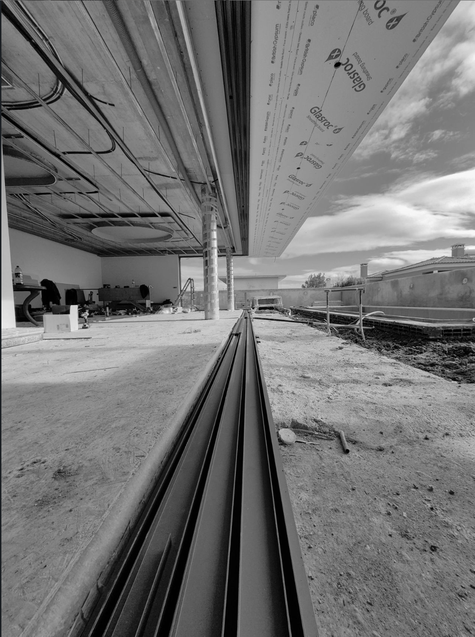
Integration defines performance.
Most problems in minimalist architecture do not originate in the system itself. They arise at interfaces.
Floors, walls, drainage concepts and tolerance zones determine whether reduced architecture remains convincing over time.
This becomes particularly evident when projects are realised across different climates and regulatory contexts. Thermal separation, waterproofing concepts and drainage strategies vary significantly depending on location, weather exposure and construction tradition. What works in one region cannot simply be transferred to another without adaptation.
For minimalist systems, this variability is not a complication — it is a defining condition.
Because visible elements are reduced to a minimum, the quality of integration carries greater weight. Thermal bridges, moisture paths and material transitions become critical factors for long-term performance. Insulation materials, sealing layers and drainage concepts must be conceived as part of a coherent system, not as secondary additions applied later in the process.
One principle remains constant across climates and applications.
Minimalist systems are typically not fixed through the base profile into the slab. They are anchored laterally. This preserves waterproofing layers and improves long-term durability.
This approach is not a detail of execution.
It is part of the system logic.
When this logic is understood and respected, the opening integrates cleanly into the building envelope. Water is guided rather than resisted. Thermal separation remains intact. Movements are accommodated without stressing seals or finishes.
When it is overlooked, problems rarely appear immediately.
They emerge gradually — through moisture ingress, material fatigue or loss of performance that contradicts the architectural intention.
For architects, this means that integration decisions cannot be deferred entirely to execution. They shape the boundary conditions within which installers operate. For installers, it requires familiarity with the specific logic of minimalist systems and the discipline to follow it consistently.
Performance, in this sense, is not measured by a single value or certificate.
It is the result of many aligned decisions, taken early and carried through the entire process.